You can see more of Matt’s photographs on Instagram ( https://www.instagram.com/mda_in_az/" ) or on his website: https://mattinflagstaff.com".
Unless indicated otherwise, all data for the images were acquired using a William Optic RedCat 71, ZWO AM5N mount, and a ZWO ASI2600 OSC camera, controlled by a ZWO ASI Air Plus. All subframes were processed, along with calibration frames, using PixInsight.
|
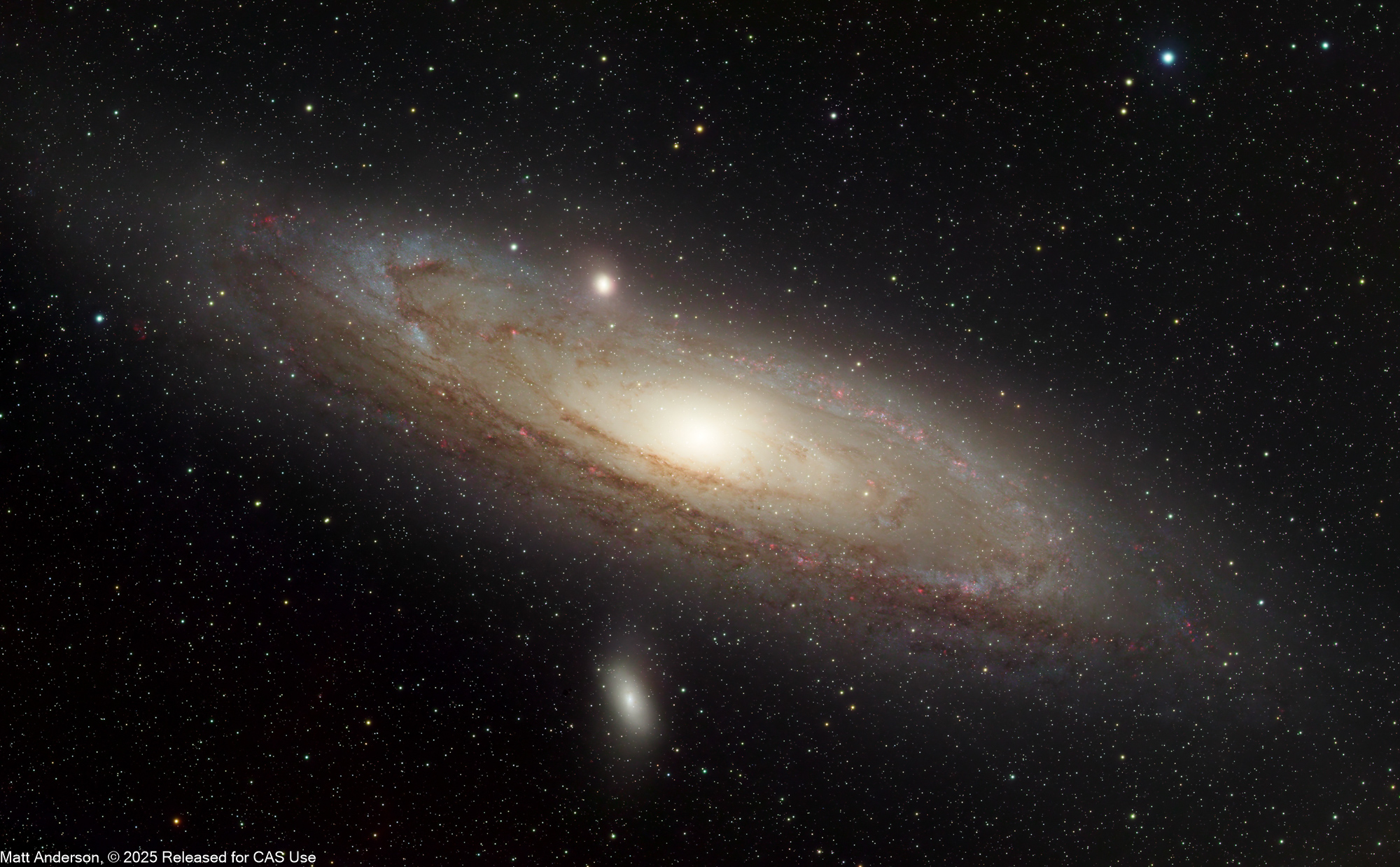
Andomeda Galaxy (M31) |
This is an image of the Andromeda Galaxy based on about 5 hours of data. I had traveled to Portal, Arizona, for what I hoped would be a week of astrophotography. Mother Nature had other plans and delivered some much-needed rain to the area, obscuring the skies for all but a night and a half. This was my first attempt at adding hydrogen alpha data to an LRGB image. In an image of a galaxy, such as this one, these data can help highlight the star-forming regions, which contain glowing clouds of ionized hydrogen resulting from the energetic emissions of young, massive stars nearby. In this image, those regions are showcased by the red areas in the arms of the galaxy. Matt Anderson |
|
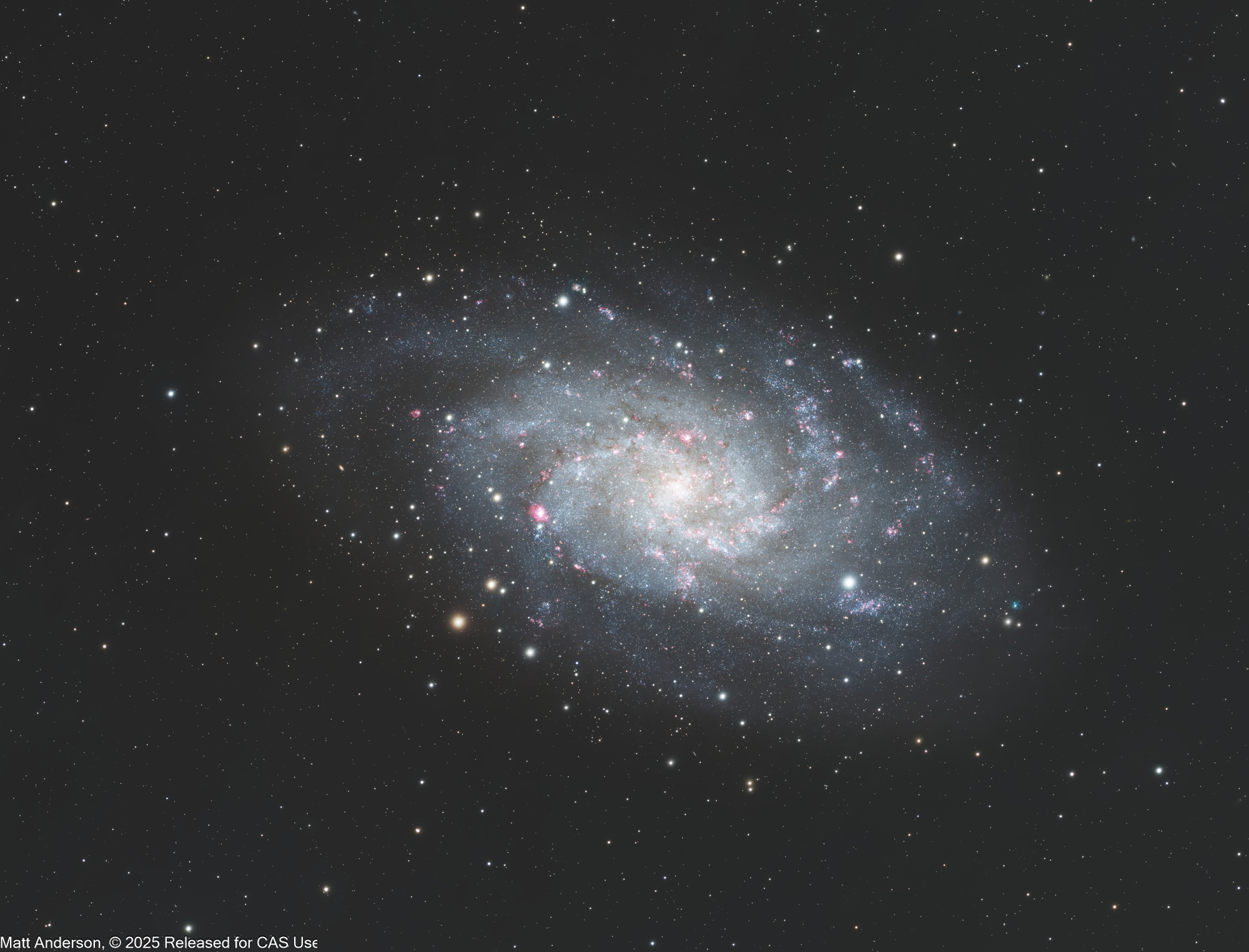
Triangulum Galaxy |
This is an image of the Triangulum Galaxy (M33), located about 2.73 million light-years from Earth. I’ve photographed this in the past but was never happy with the results. I’m pleased with this version. It was based on about 23 hours of LRGB and Hydrogen-alpha (Ha) data, more than twice as much as before. Matt Anderson |
|
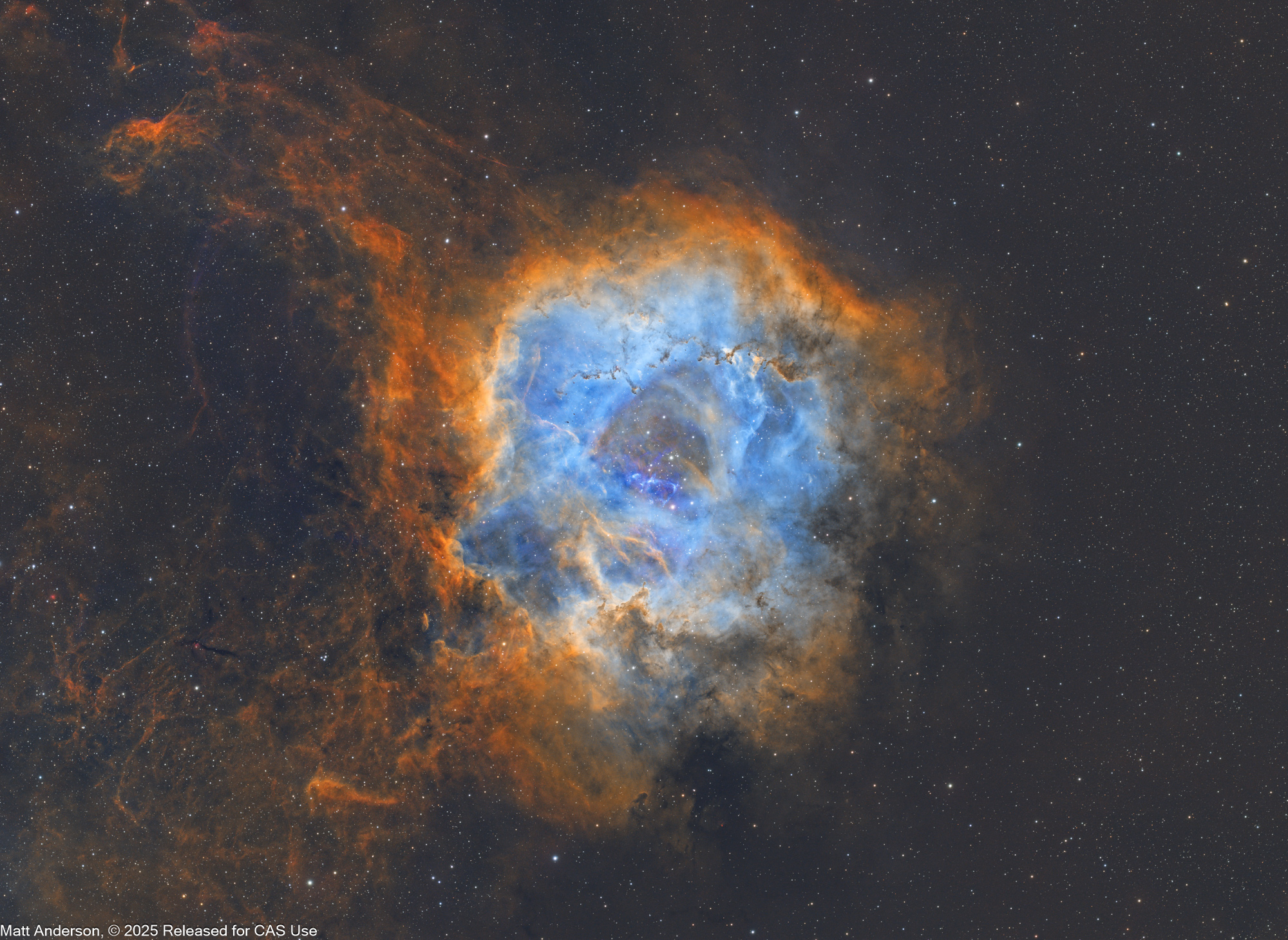
Rosette Nebula |
This image of the Rosette Nebula was created in an SHO palette using a little more than 20 hours of data captured through my RedCat 71 at Starfront Observatories. This nebula is an absolute beauty, regardless of whether it’s imaged in broadband or narrowband. If you find yourself engaged in a trivia game over the holidays and the question is, “What is Oklahoma’s State Astronomical Object?”, you can answer with confidence that it’s NGC 2237, the Rosette Nebula! Matt Anderson |
|
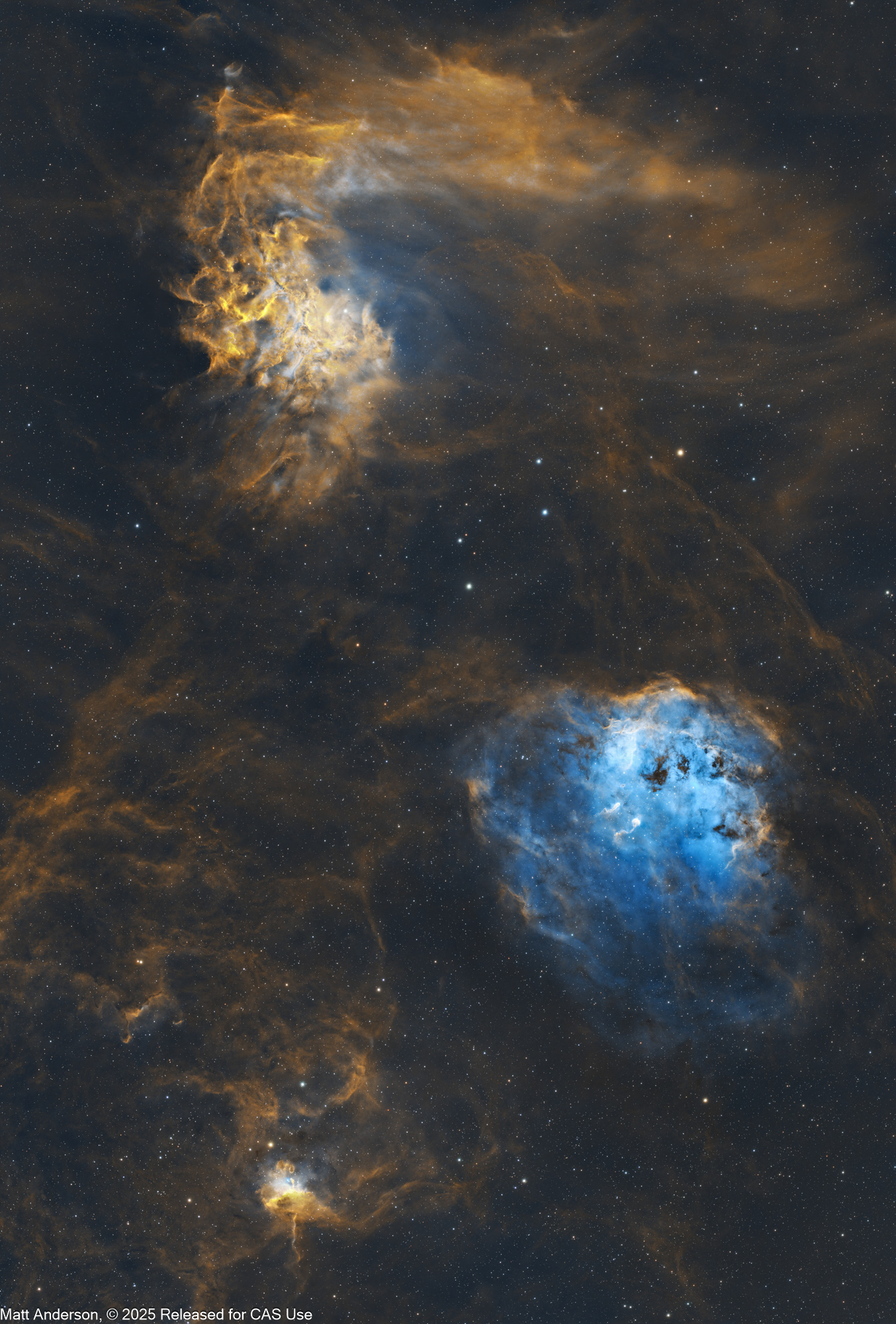
The Flaming Star Nebula, Tadpole Nebula, and Spider Nebula. |
There are three nebulae in this image. From top to bottom: The Flaming Star Nebula, Tadpole Nebula, and Spider Nebula. These nebulae are found in the constellation Auriga (the Charioteer). The image was created using about 19 hours of narrowband data processed using the SHO palette and 7 hours of RGB data for the stars (and, eventually, an LRGB image). Data were captured using a RedCat 71 (350 mm, f/4.9). Matt Anderson |
|
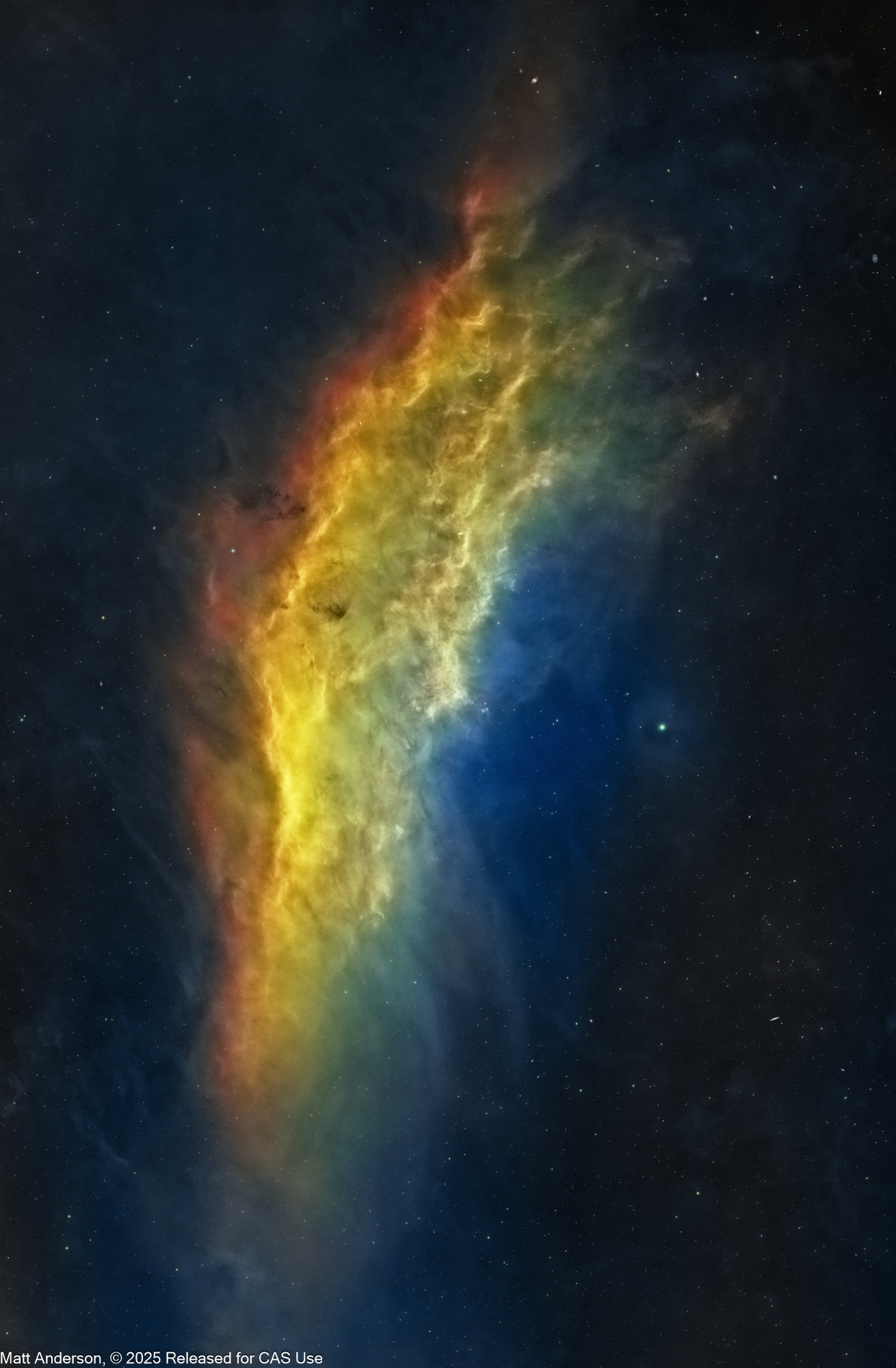
California Nebula |
This is an image of the lovely California Nebula (NGC 1499), an emission nebula located approximately 1,000 to 1,500 light-years away, created as a narrowband (SHO) image based on nearly 22 hours of data. Data were captured using my RedCat 71 at Starfront Observatories and processed using PixInsight Matt Anderson |
|
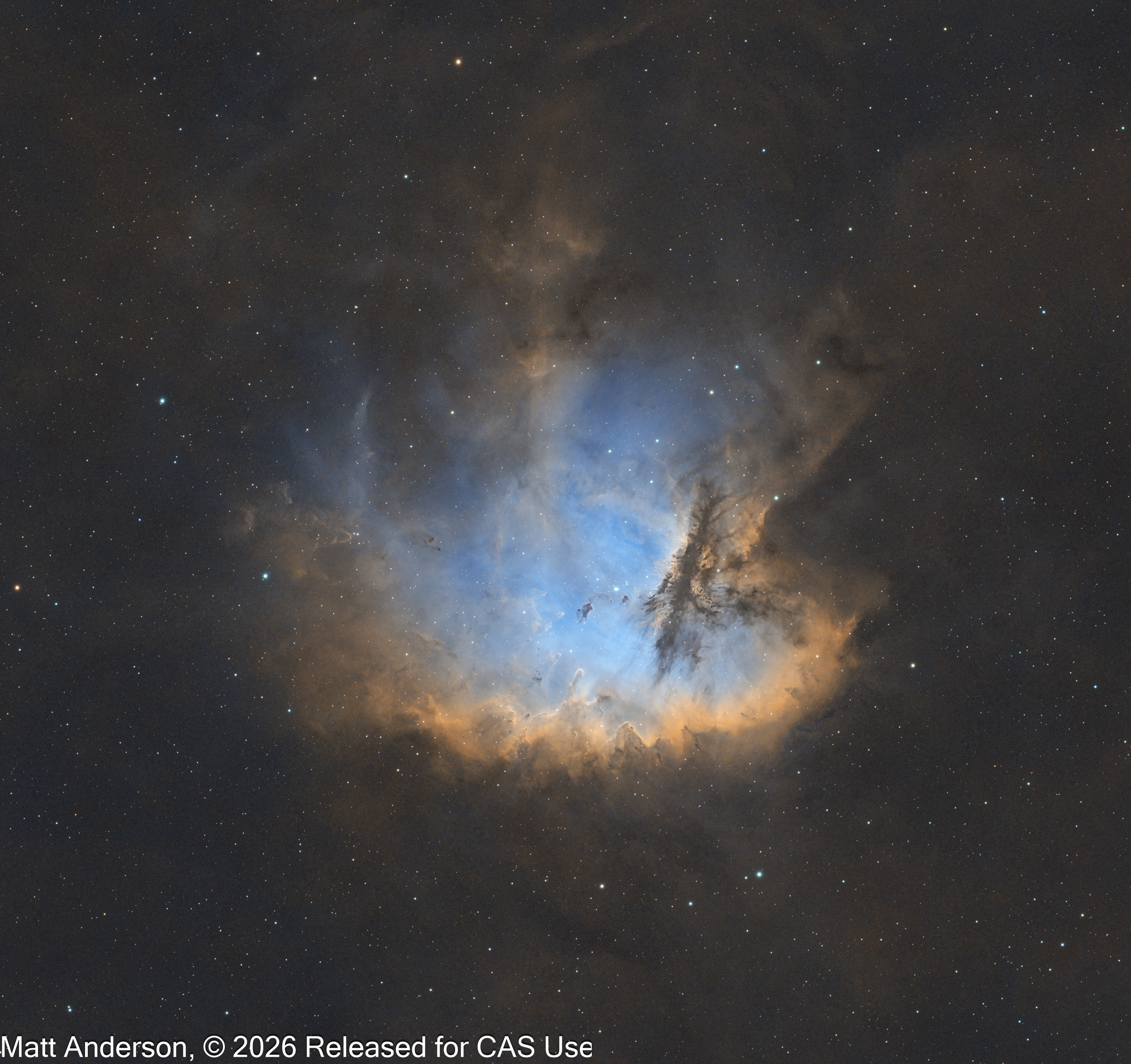
Pacman Nebula |
This is a narrowband image of the Pacman Nebula (NGC 281), created with about 10 hours of data captured using my RedCat 71 (hosted at Starfront Observatories). This emission nebula is located about 9,200 light-years away, in the Perseus arm of the Milky Way. The combination of sulfur II, hydrogen-alpha, and oxygen III data allows us to see details not evident in monochrome images (plus, they can be visually stunning). In this image, you can see how the dust lanes obscure the glowing gases in the background, creating the “mouth” of the Pacman we first saw playing the game years ago. Matt Anderson |
|
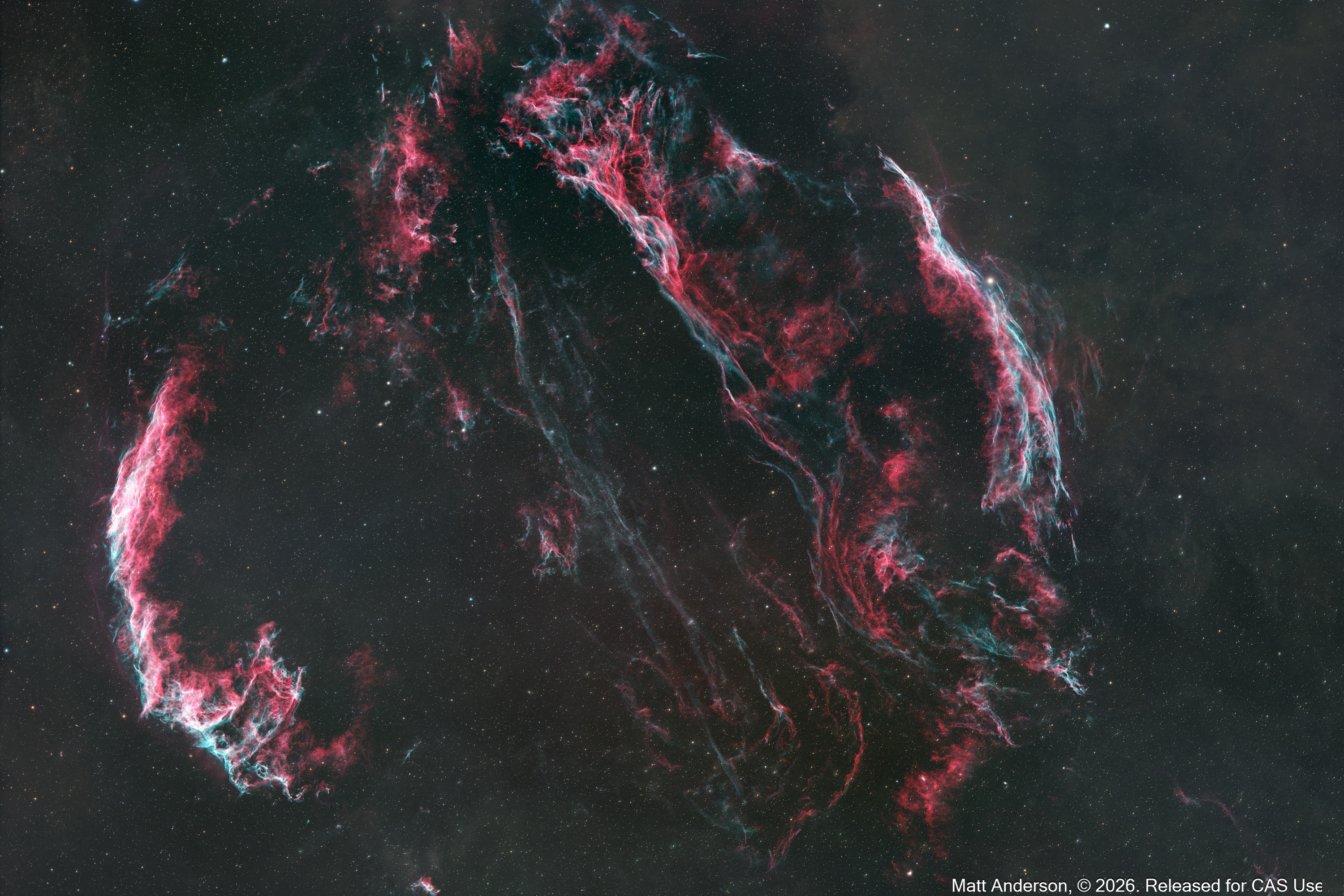
Veil Nebula |
The Veil Nebula comprises the visible portion of the Cygnus Loop, a supernova remnant found in the constellation Cygnus. It lies about 2,400 light-years from Earth. The progenitor star is estimated to be 12 to 20 times more massive than our Sun and exploded between 15,000 and 25,000 years ago. This image was created using an RGB palette into which I blended some narrowband Oiii data to bring out more of the blue colors. Some of the interstellar dust around the nebula can be seen on the right. Data were captured using a RedCat 71 and processed in PixInsight. The total aggregation time was approximately 8.3 hours. Matt Anderson |